What Is Circular Polarization?
Polarization describes the orientation of a radio wave's electric field as it travels. With linear polarization, that field stays fixed along one axis — vertical, horizontal, or somewhere in between. With circular polarization (CP), the electric field instead rotates in a full circle once per RF cycle as the wave moves forward, tracing out a corkscrew shape through space.
There are two directions that rotation can go, and antennas are labeled accordingly:
- RHCP — Right-Hand Circular Polarization
- LHCP — Left-Hand Circular Polarization
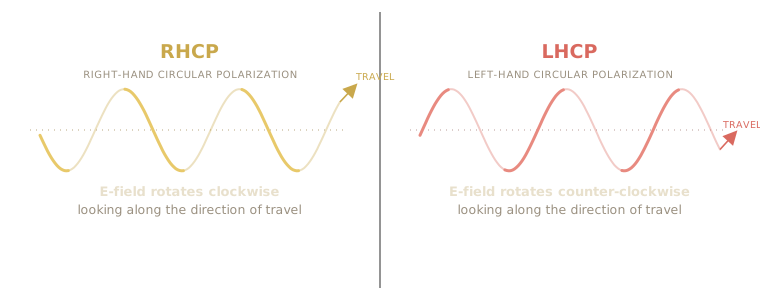
"Right-hand" and "left-hand" describe the direction of rotation when you look along the direction the wave is travelling — the same convention antenna engineers use for satellite, radar and FPV links (note: optics and some other fields define handedness the opposite way, looking back toward the source, so double-check which convention a given datasheet uses if the two seem to disagree).
RHCP vs LHCP Rotation
The diagram below shows both cases as the wave travels toward you. The only physical difference between RHCP and LHCP is this direction of rotation — the two perform identically in every other respect, including gain, bandwidth and radiation pattern, when built to the same design standard.